About the SPRINT Toolbox
Welcome to the SPRINT Toolbox!
The SPRINT Toolbox helps you build a clearer picture of pesticides’ impacts on human health and ecosystems. Using extensive European data from the EU SPRINT project, the Toolbox lets you explore maps of pesticide occurrence, exposure (dietary and environmental), and eco/toxic risks.
For decision-makers and policy-makers, the Toolbox supports integrated risk assessments of pesticides (One/Global Health approach) and informs strategies aimed at reducing pesticide use.
For scientists, the Toolbox provides a structured platform integrating SPRINT data, exposure models, and health impact methodologies, helping you build on existing work without unnecessary duplication.
For the wider public, the Toolbox offers accessible information on pesticides in Europe, showing where they occur, at what levels, and their effects on humans, plants and animals
How was the SPRINT Toolbox developed?
This Toolbox and its data were produced by the SPRINT project (funded by European Union), which investigated the risks and impacts of pesticides on the environment and human health, and explored pathways towards more sustainable plant protection within a global health framework.
The Toolbox brings together:
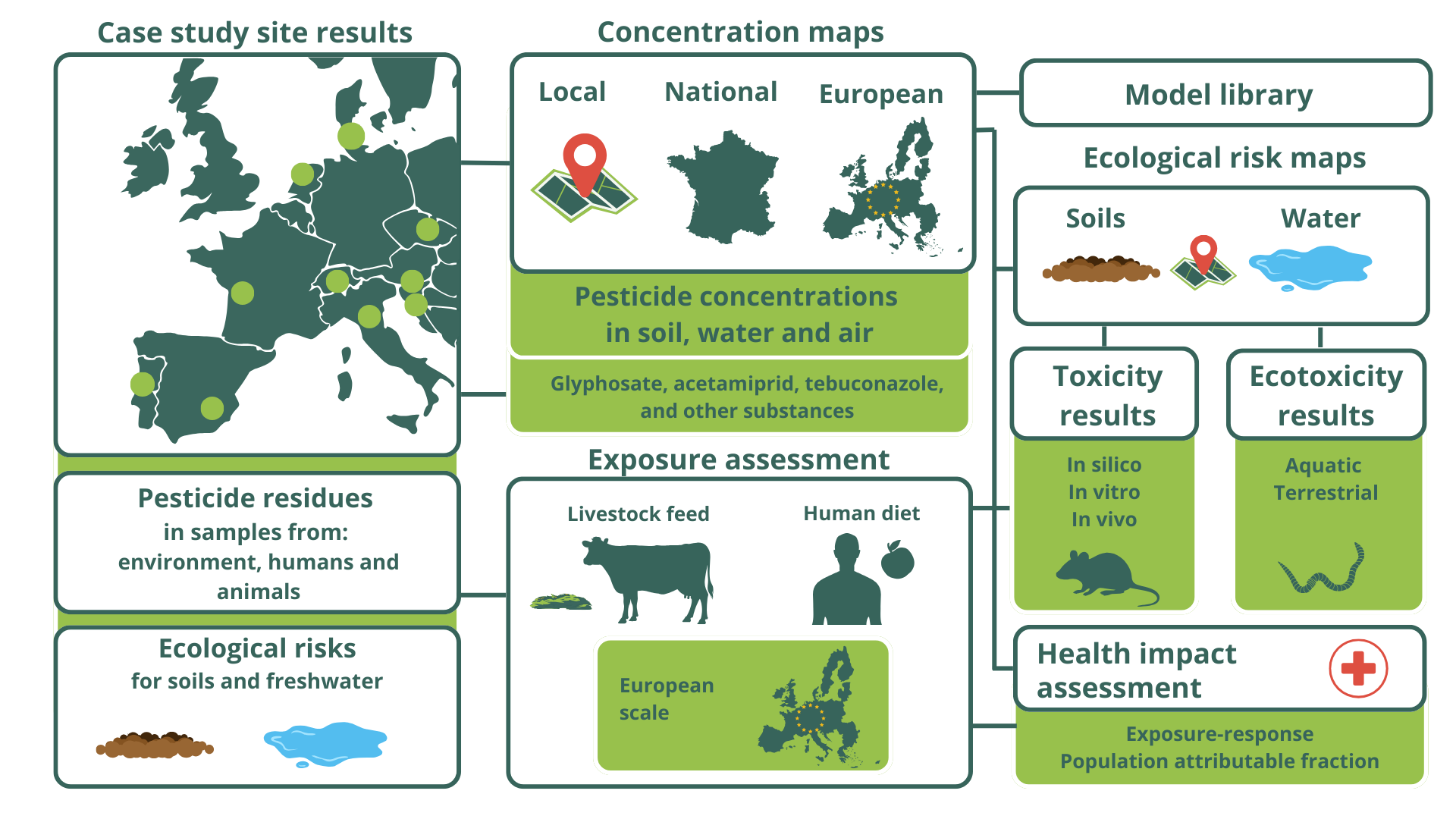
i) interactive presentations of SPRINT results (case study findings, toxicity and ecotoxicity studies);
ii) modelling, upscaling and mapping approaches for pesticide occurrence, exposure and risks; and
iii) data-mining, analysis, and extrapolation tools drawing on national and European pesticide datasets.
These tools address pesticide issues, ranging from local case studies to national and European scales, and provide access to results, algorithms, model frameworks, and maps that summarize the work of SPRINT researchers.
Explore the Toolbox
Use the top menu to access each of the tools we have developed. Each tool includes an introduction that explains its purpose and how it can be useful for different types of users. There are also authors of the tools displayed who can be contacted with additional questions or for future scientific cooperation.
Before using the tools, check their description to understand what they show and do not show, how they were constructed, what data were used, how the outputs should be used and interpreted, and where their limitations are.