
Authors: Rozita Soltani Tehrani (rozita.soltanitehrani@wur.nl); Lingtong Gai (lingtong.gai@wur.nl); Paula da Silva Tourinho (paula.tourinho@recetox.muni.cz); Vera da Graca Silva (vera.felixdagracasilva@wur.nl)
Last update: 06/02/2026
Users can explore the results from two different perspectives by selecting either matrices or countries from the “left menu.” Additionally, for soil and water concentrations, ecological risk was calculated, and these results are also accessible via the left menu.
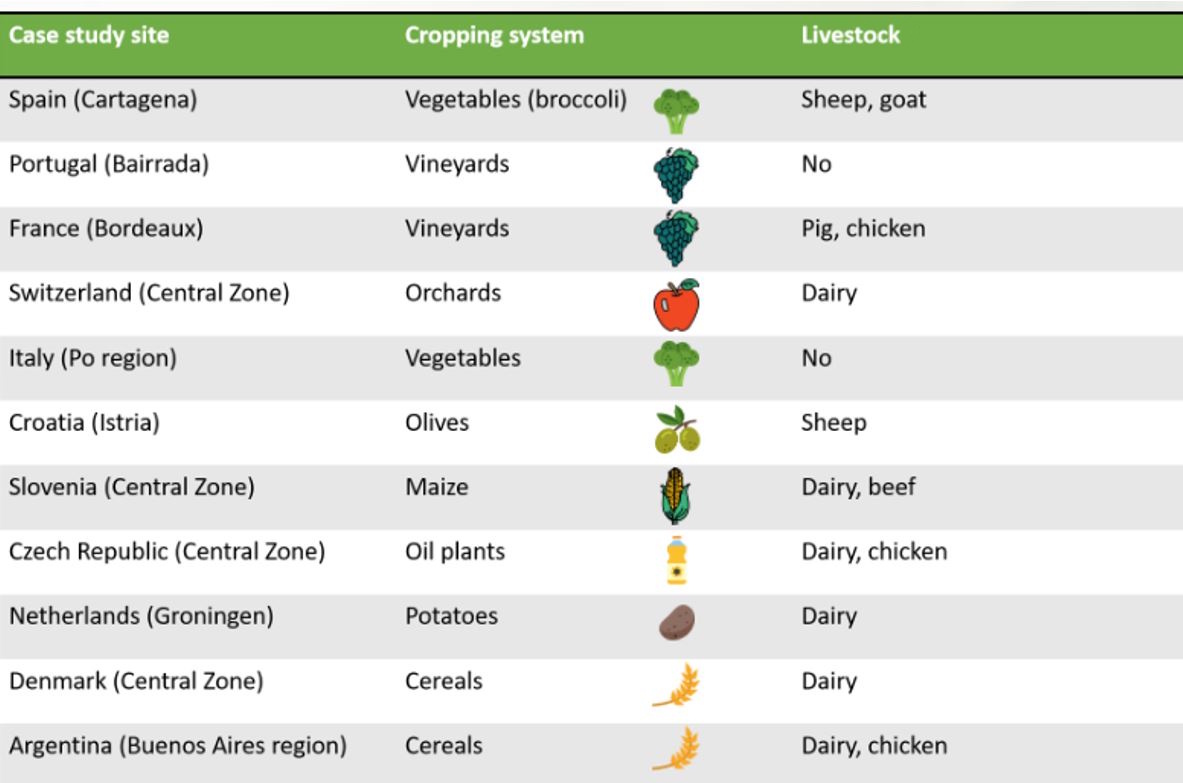
The SPRINT sampling campaign was conducted during the 2021 growing season at 11 case study sites, covering major European crops and one site in Argentina, which is a key exporter of soy for animal feed in Europe.
Each case study site consisted of an average of 10 fields managed under conventional/integrated pest management and 10 fields managed organically.
Samples were collected from environmental, human, and animal matrices to assess their respective impacts.
The results presented in this Toolbox are described in detail in the project deliverables D2.3 and D2.4. Most of these findings have also been published in individual and overarching scientific papers. A full list of related publications is available on the SPRINT website.
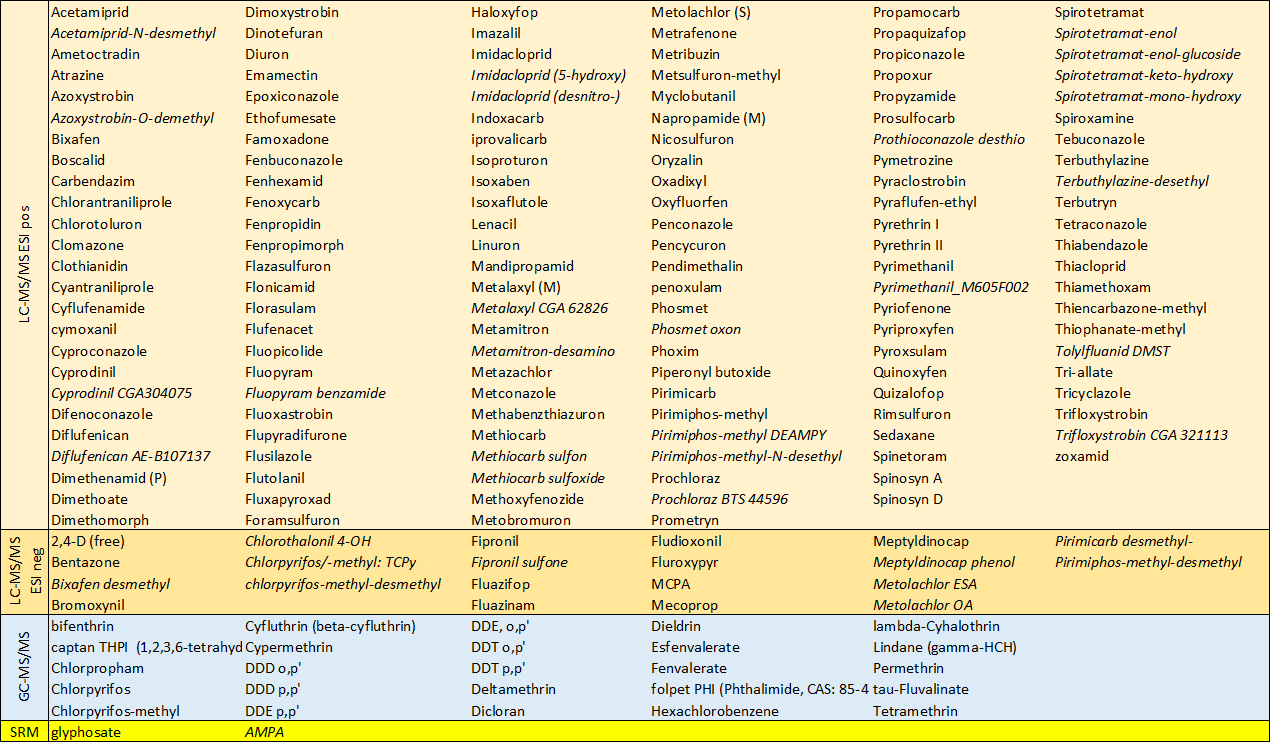
The limit of detection (LOD) table can be found here. The LOD was estimated based on the signal-to-noise ratio of the quantifier ion, with the concentration corresponding to S/N = 3
Further information about the sampling design and site selection is provided in Silva et al. (2021)