
Summary
Aim of Tier 2
Test the Top 10 most concerning pesticides using lab-based (in vitro) models to study their effects on cells, in an individual way or as a mixture (Mixture of top 3 and 8).
Type of test used in Tier 2
- Cytotoxicity assays → to see if the pesticides kill cells (standard EFSA Test)
- Micronuclei assays → to detect DNA damage (standard EFSA Test)
- Kidney cell assays → new model to test kidney effects (New SPRINT Indicator)
- Organoid assays → 3D mini-organs to study complex cell responses (New SPRINT Indicator)
Results of Tier 2 (individual results are described in detail for each experiment)
- Pesticides that have been tested in Tier 2 showed at least one positive signal for toxicity.
- Pesticide mixtures proved to be consistently more detrimental, showing additive (non-synergistic) and linear dose-responses.
- In general, the new SPRINT Indicators proved to be sensitive and relevant for different toxicological endpoints of interest but further validation is required for their use for risk assessment and pre-market evaluations..
Detailed reports
Tier 2 consisted of a series of in vitro studies:
- cytotoxicity assays (EFSA Tests),
- micronuclei assays (EFSA Test),
- kidney cells assays (New SPRINT Indicator), and
- organoid assays (New SPRINT Indicator).
The Top 10 pesticides of concern selected for in vitro testing in Tier 2 were: acetamiprid, cypermethrin, cyprodinil, deltamethrin, fluopyram, glyphosate, imazalil, lambda-cyhalothrin, tebuconazole, and the synergist piperonyl butoxide.
Two combination pesticide treatments were used. The first was named the Top 3 and was composed of acetamiprid + glyphosate + tebuconazole.
The second combination treatment was named the Top 8, containing: acetamiprid + cypermethrin + cyprodinil + deltamethrin + glyphosate + lambda-cyhalothrin + piperonyl butoxide (synergist) + tebuconazole.
In the following sections, the users will find detailed reports for different in vitro tests including their aims, methods and results.
Cytotoxicity Assays
Aims
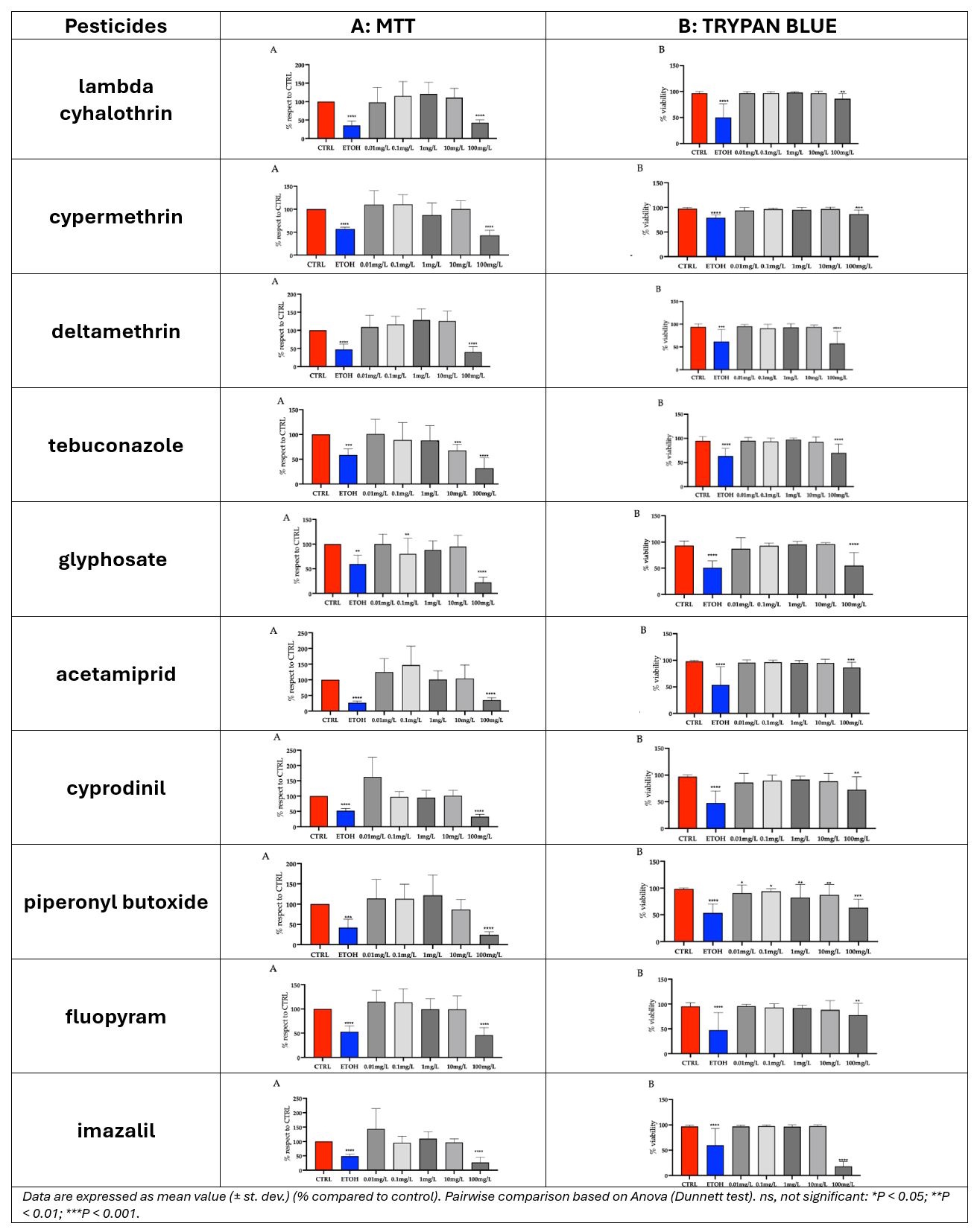
Assessing cytotoxicity is essential for understanding the impact of these compounds on human cells, particularly those of the gastrointestinal system, which are among the first to encounter ingested pesticides. The objective of the present study was to investigate the in vitro cytotoxicity of ten pesticides on Caco-2 cells, both individually and in two mixtures, using both MTT and trypan blue assays.
Methods
The human epithelial Caco-2 cell line, obtained from primary colorectal adenocarcinoma, was used. Caco-2 cell line are commonly employed as they closely mimic the intestinal epithelial barrier. The MTT assay and the trypan blue exclusion, two widely accepted protocols, were used. The MTT Assay measures cellular metabolic activity by quantifying the reduction of tetrazolium salts into insoluble formazan crystals, an indicator of viable, metabolically active cells. Instead, the trypan blue exclusion test assesses membrane integrity, distinguishing live cells from dead cells based on their ability to exclude the dye.
Results
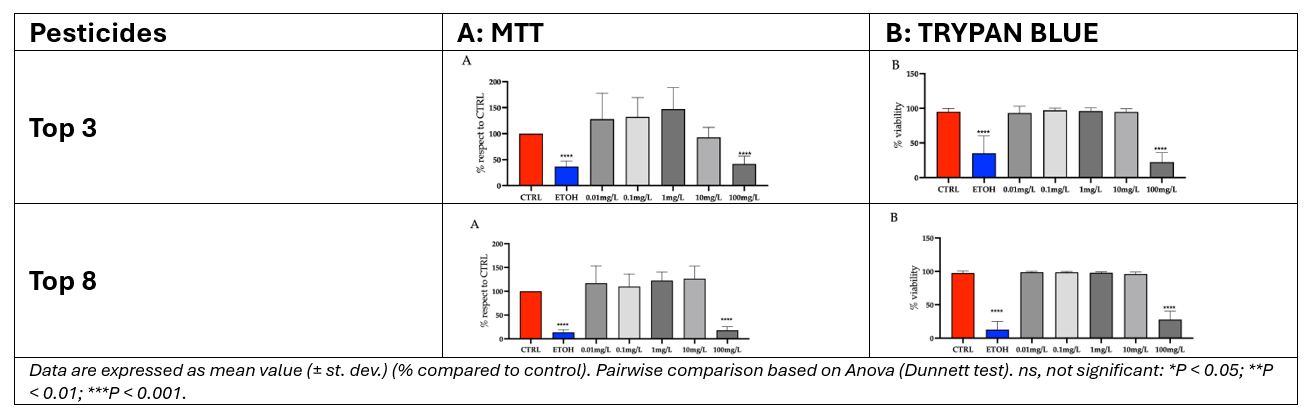
All the tested pesticides and their mixtures significantly reduced both cell viability and vitality at doses equal or lower than 100 mg/Lin Caco-2 cells. The combination treatments (Top 3 and Top 8) revealed that the toxic effects observed for individual pesticides were preserved when administered in mixtures at the same doses, suggesting a linear and additive dose-response (no- indication of a synergistic effect).
Micronuclei Assays
Aims
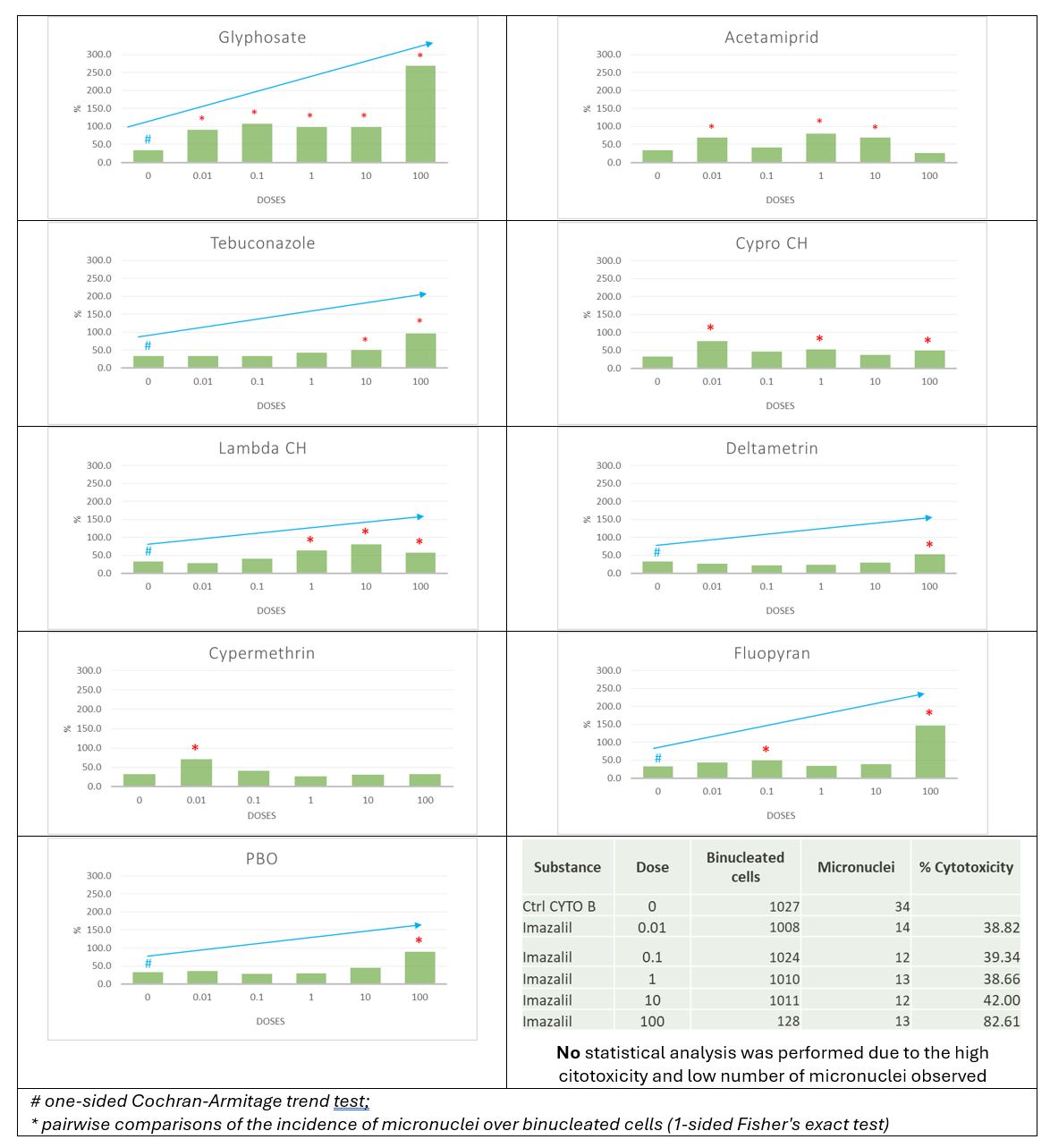
Genotoxicity assessment represents an important component of the overall safety assessment of pesticides and further investigations are warranting. The aim was to provide genotoxicity risk assessments of ten commonly used pesticides as mono-constituents and in two combination mixtures, the Top 3 and the Top 8, at concentrations of 0.01 mg/L, 0.1 mg/L, 1 mg/L, 10 mg/L and 100 mg/L, respectively. It was pursued using the international regulatory accepted in vitro micronucleus assay on the human intestinal epithelial cell-line, Caco-2.
Methods
Of the methods to test for genotoxicity, the in vitro micronucleus assay has gained widespread international regulatory acceptance. The principle behind the assay is the measurement of micronuclei which are formed during mitosis as a result of DNA damage from exposure to a test chemical.
Results
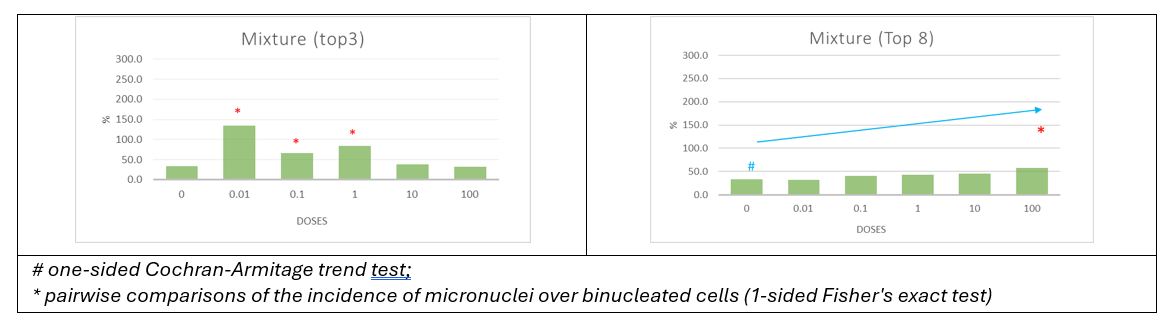
The study showed that for lambda-cyhalothrin, cypermethrin, deltamethrin, tebuconazole, glyphosate, cyprodinil, fluopyram and the synergist piperonyl butoxide the Top 3 and the Top 8 genotoxicity was observed in intestinal epithelial cells. The combination treatments (Top 3 and Top 8) revealed that the toxic effects observed for individual pesticides were preserved when administered in mixtures, suggesting a linear and additive dose-response (non-synergistic).
Kidney Cells Assays
Aims
The kidney plays a major role in the elimination of drugs and toxins. Consequently, this organ is exposed to high levels of xenobiotics. The aim of this study was to investigate mixture effects of pesticides relevant to humans, i.e. as detected in urine or blood in SPRINT. In particular, the effect of a background mixture of these pesticides on the effects of other nephrotoxic pesticides was investigated.
Methods
The human renal proximal tubule epithelial cell (RPTEC) line HK-2 was used, and changes in gene expression were determined using RNA sequencing and RT-qPCR.
For RNA sequencing analysis, HK-2 cells were exposed to the substances separately at high, non-cytotoxic concentrations, and as different mixtures at concentrations relevant in vivo.
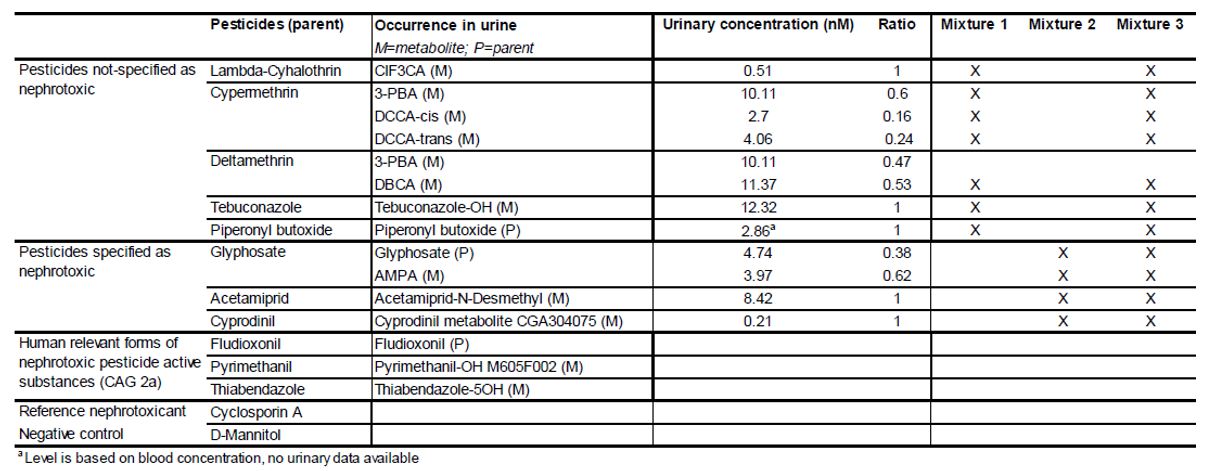
Results
Gene expression profiles of HK-2 cells exposed to individual pesticide active substances in human-relevant form
Overall, similar changes in gene expression were observed between the substances; the positive control cyclosporin A was clearly separated from the other test substance, as well as piperonyl butoxide and the cyprodinil metabolite. Exposure to piperonyl butoxide and cyprodinil metabolite also resulted in the highest number of differentially expressed genes.
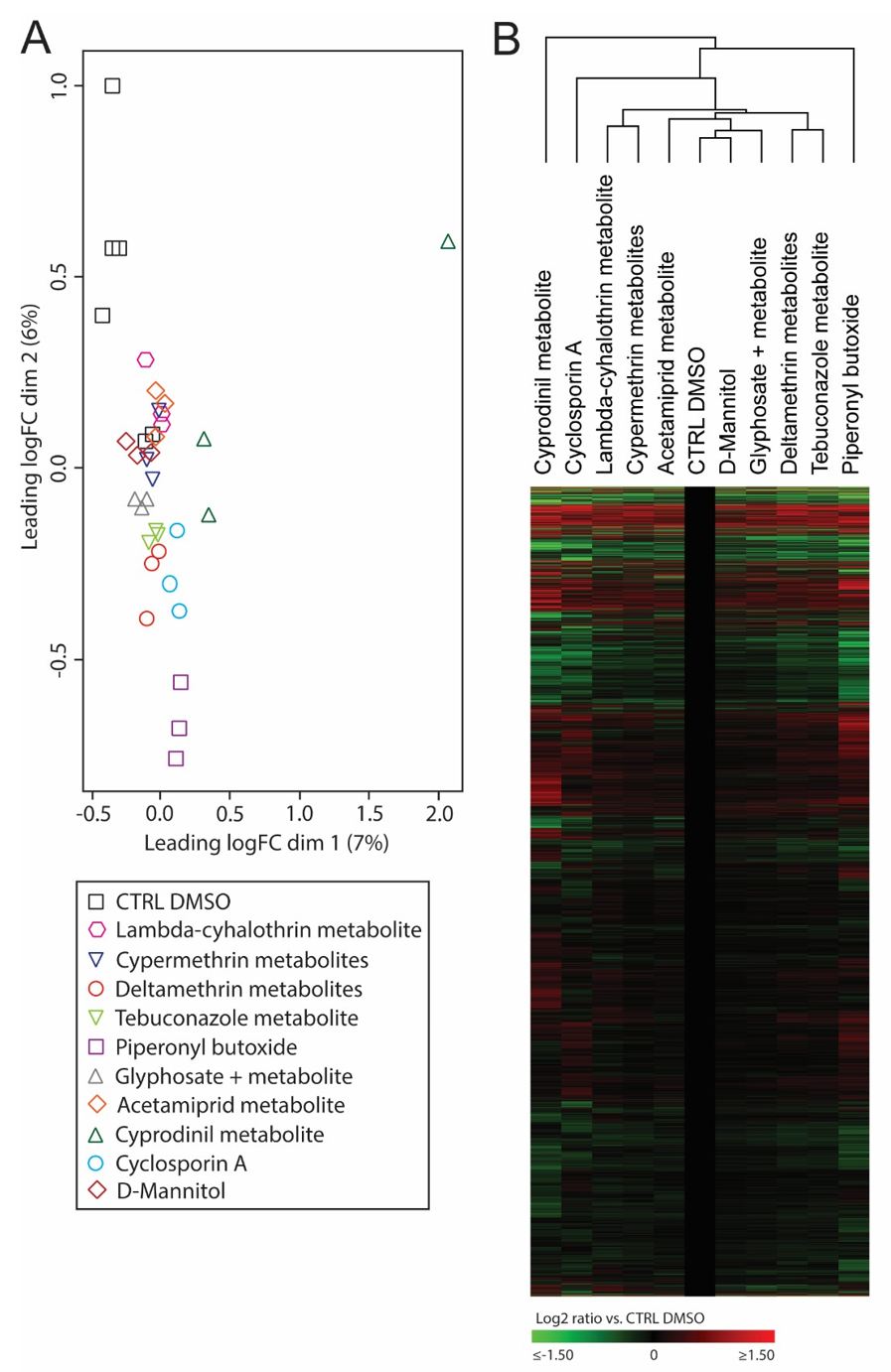
Transcriptomic analysis of HK-2 cells exposed to individual (non)-nephrotoxic pesticide active substances or their metabolites.
Gene expression profiles of HK-2 cells exposed to mixtures of (non)-nephrotoxic pesticide active substances (metabolites)
At the concentrations tested, the mixtures of (non)-nephrotoxic pesticide active substances or their metabolites at human-relevant concentrations did not have an effect on cell viability of HK-2 cells.
Moreover, exposure to cyclosporin A resulted in the highest number of DEGs. An overall increasing trend in the number of DEGs was observed upon exposure to increasing concentrations of mixtures 1 and 3. Contrarily, an opposite trend was found for mixture 2, since the number of DEGs decreased whilst the mixtures became more concentrated.
The highest percentage of overlap between the mixtures was observed for the 100x concentrated mixtures 1 and 3 (i.e., 8.6%). The majority of the overlapping genes between the mixtures were overlapping in a similar direction, i.e., upregulated or downregulated, which emphasizes the comparability of gene expression profiles between the three mixtures.
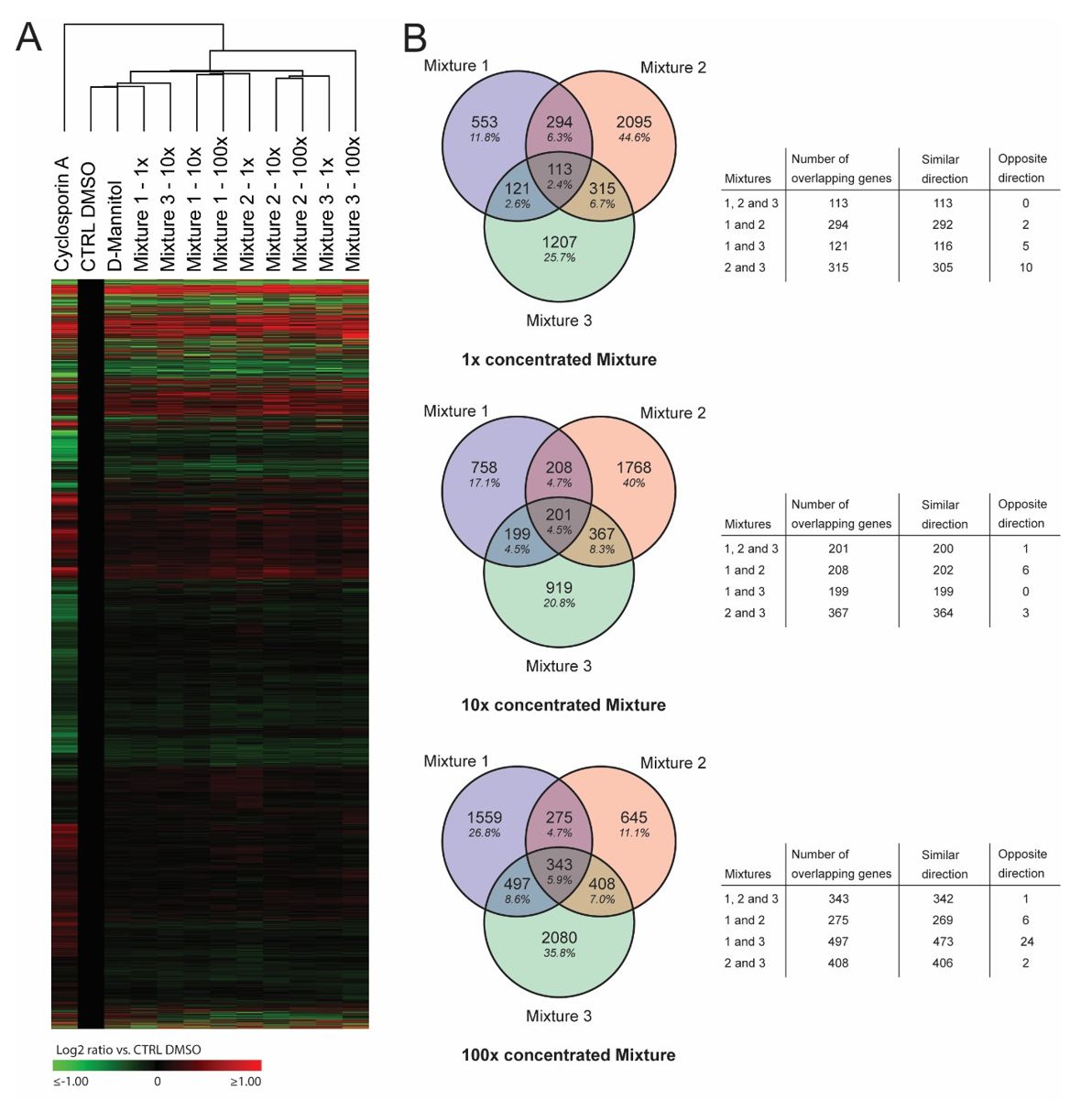
Transcriptomic analysis of HK-2 cells exposed to mixtures of (non)-nephrotoxic pesticide active substances or their metabolites.
Gene expression profiles of HK-2 cells exposed to human relevant forms of nephrotoxic pesticide active substances
Of the human relevant forms of nephrotoxic pesticide active substances, only exposure to the highest concentration of fludioxonil resulted in a slight decrease in cell viability to just below 80%. Gene expression analysis revealed that the highest number of DEGs was observed at the highest concentration of fludioxonil.
Organoid Assays
Aims
The use of organoids derived from human stem cells allows for testing on human tissue. One aim of this work was to explore the possibility of using human intestinal epithelial and human airway organoids as new SPRINT indicators for toxicity of mixtures or individual pesticides.
Methods
Organoids, three-dimensional cell cultures that mimic the structure and function of organs that emerged as a powerful tool for disease modelling and toxicological studies, were used. Human intestinal epithelial organoids were used for testing pesticides.
Human intestinal epithelial organoids
For viability assay, differentiated 2D polarized organoid monolayers were cultured and cells were dissociated to reach a single cell suspension. The selected pesticides were lambda-cyhalothrin, glyphosate, imazalil, PBO, acetamiprid, cypermethrin, cyprodinil and fludioxonil. The monolayers were exposed for a period of 96h.
Results
Viability assays human intestinal organoids
Due to technical issues we were not able to test lower concentrations and the effect of mixtures.
At a concentration of ~100*ADI, after 48 hours, viability over time is decreased for all treatments except for lambda-cyhalothrin, that does not impact cell viability and Fludioxonil treatment, that only has a minor effect on viability. Viability for cyprodinil and imazalil is 0% after 48h. The viability of glyphosate and PBO treated cells decreases to 0% after 96h, while viability for acetamiprid and cypermethrin is approximately 60% compared to DMSO control.
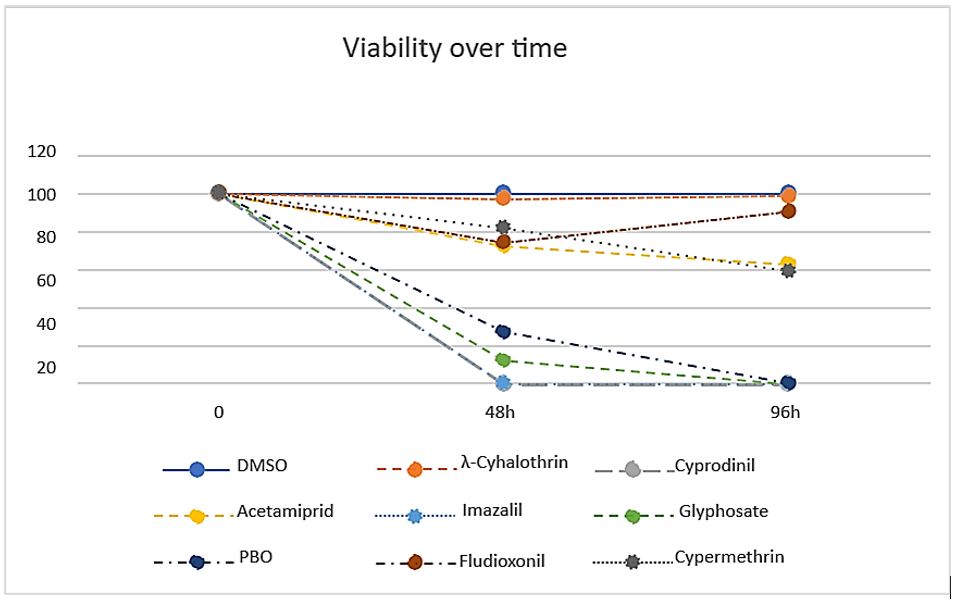
Average viability of 2D human ileum organoids over time, where viability at timepoint 0 is assumed to be 100% for illustration purposes. At timepoint 48h and 96h, the viability is calculated relative to the average value for DMSO control (100%) and to the average value for wells that only contained medium and no living cells (0%).
In the PBO and glyphosate treated wells, the treatment caused so called ‘etch pits’ in the plastic of the wells. This effect has been observed previously for PBO but has not previously been described for glyphosate.
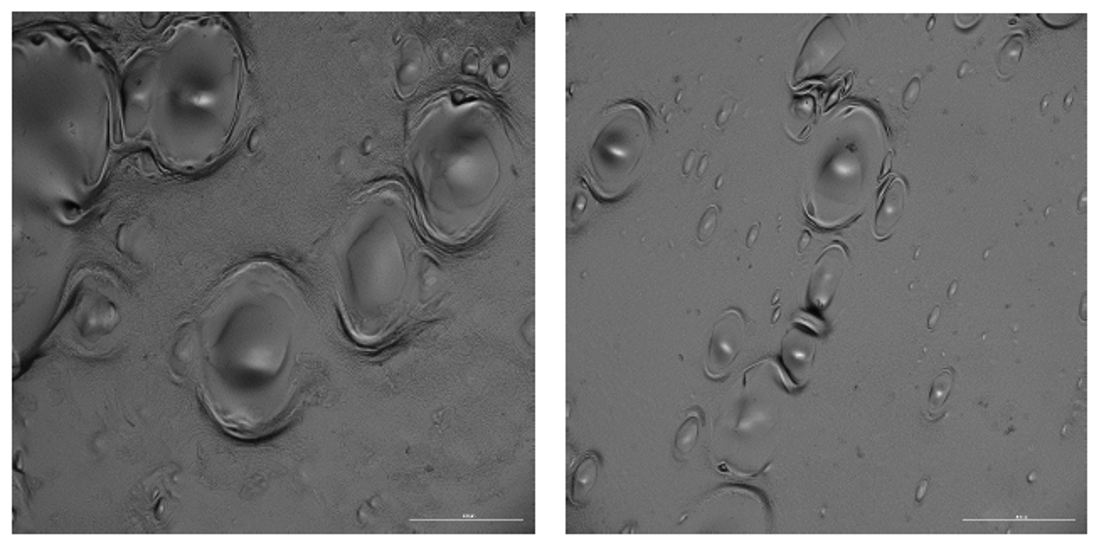
right: etch pits observed in PBO treated well