
Samples were collected from animals and livestock on an average of 6 conventional and 6 organic farms per case study site to investigate pesticide exposure in these species.
The figure below illustrates the design of our sampling campaign.
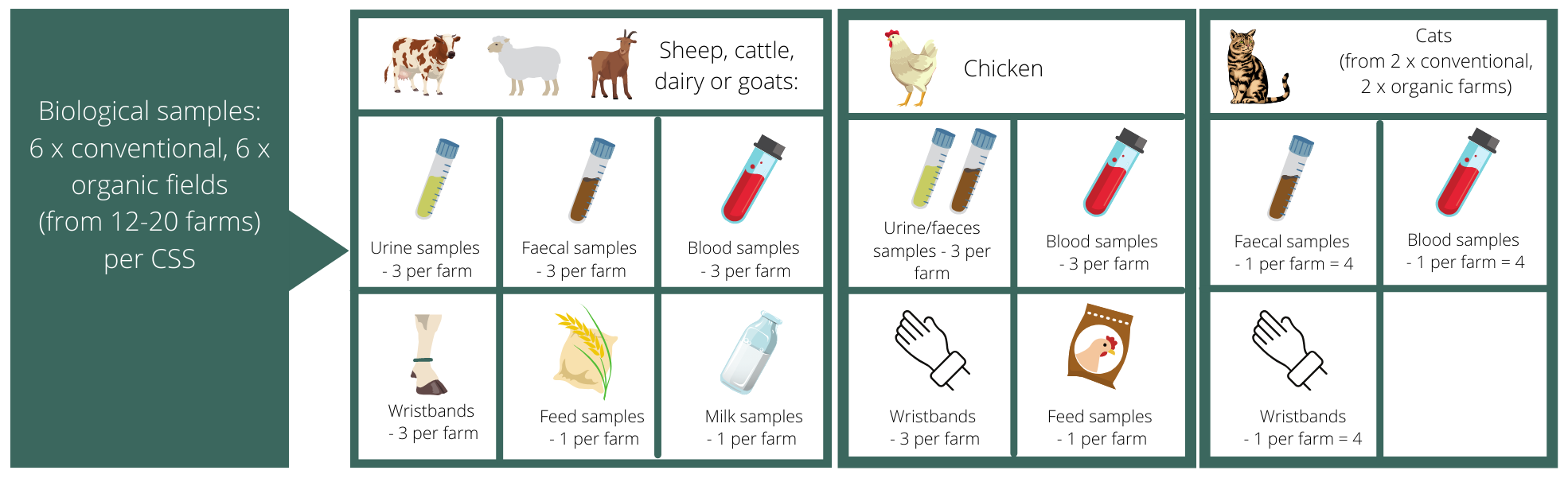
Sampling Strategy
Urine sampling
Depending on the type of animal (dairy, sheep, goat, or pig), 100 mL urine was collected and aliquoted the same day into smaller cryo tubes. After aliquoting, all tubes were stored in the freezer (- 18°C or lower) until transport to WFSR.
Blood sampling
Depending on the size of the animal, blood was drawn from by venipuncture by a trained veterinarian. After fractioning, whole blood, serum, and plasma were stored at -80°C until transportation to Radboud University Medical Centre, Nijmegen, the Netherlands for further analysis.
Faeces sampling
Depending on the type of animal, faeces samples were taken directly from the animal (dairy, sheep, goat, chicken, pig) or identified in the close vicinity (cats) and one scoop of faeces was divided into 5 prelabelled collection tubes. Faeces samples were thereafter kept at -18 °C until transportation to WFSR for analysis.
Wristband sampling
On the same animals considered for urine and blood collection, a silicon wristband was attached to the animal collar or leg the day of urine/blood sampling and removed again after one week. The wristbands were kept separately in zip-lock bags at -20 °C until transportation to Radboudumc, Nijmegen, the Netherlands.
Feed sampling
One feed sample (100-500g) was collected from each farm. Dry sample material was stored at 2-10°C or at ambient temperature (in the dark). Perishable/wet sample material was stored in the freezer (-18°C) and kept frozen until pesticide analysis at WFSR.