
Humans were included in the study to illustrate the levels of pesticide residues in human bodies and to understand human exposure. Various types of samples were collected from participants, including farmers, their neighbors, and consumers. The results of the human samples were stratified by sex, gender, farming system, and participant type to allow for a comprehensive comparison across groups.
The figure below illustrates the design of the sampling campaign.
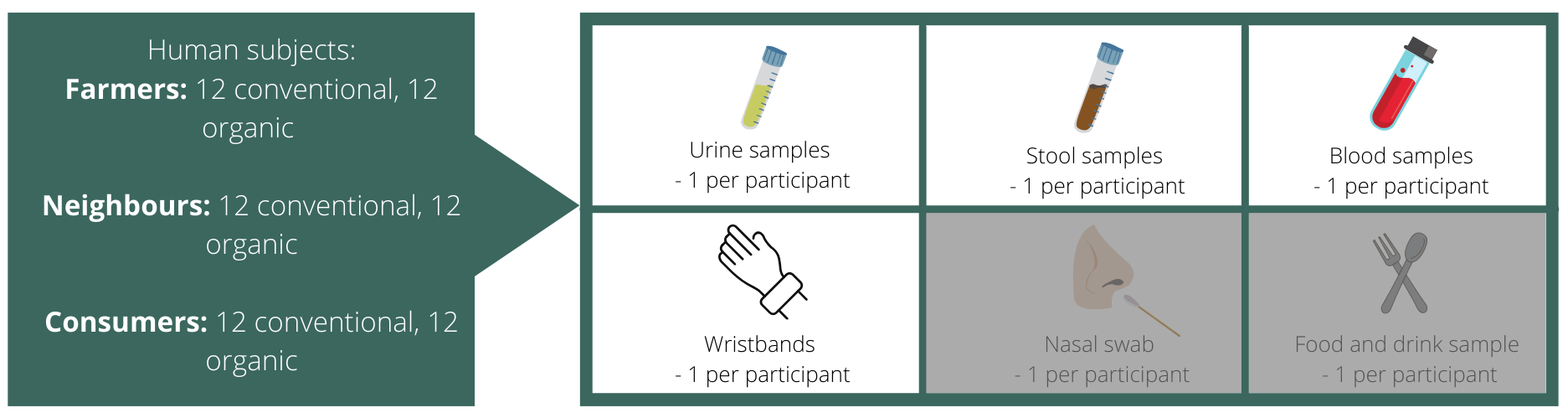
Grey blocks indicate samples from the SPRINT campaign that are not represented in this tool (mostly samples used for diversity or microbiome studies only).
Sampling Strategy
Urine sampling
Each participant collected a urine sample of approximately 60-125 mL and placed it in a cooling box (2-10°C) until pickup by a member of the research team. Within 24 hours of the sampling, the urine was aliquoted into different smaller cryotubes. After aliquoting, tubes were stored in the freezer (-18°C or lower) until transport to Wageningen Food Safety Research (WFSR) in the Netherlands, whereafter it was stored at -80°C until analysis.
Blood sampling
In total, 30-40 mL blood was drawn by venipuncture from each participant by trained healthcare personnel. After fractionating and aliquoting, whole blood, serum, and plasma were stored at -80°C until transportation to Radboud University Medical Centre in the Netherlands where it was stored at -80°C until further analysis.
Faeces sampling
Pre-labelled faeces sample collection tubes (5 in total) together with the provided collection materials were handed out to the participants before the pick-up visit by the SPRINT data collector. Participants were asked to collect a faeces sample of the first bowel movement of the day (1 scoop of faeces sample per collection tube). Faeces samples were kept at 2-10°C in a pre-delivered cooling bag until pick-up by the SPRINT data collector and were stored at -18 °C until transportation to WFSR in the Netherlands, whereafter it was stored at -80°C until analysis.
Wristband sampling
Participants were asked to wear a silicon wristband that absorbs pesticides from the surroundings (continuously for 7 consecutive days) to analyse which pesticides the person had been in contact with. After that the wristbands were placed inside a zip-lock bag and placed in the freezer. After collecting wristbands from the participants, the wristbands were stored at -20°C and sent to the analysis laboratory as one batch.