DISCLAIMER: The tools, as they currently stand, are provided for research and informational purposes only. The underlying models, assumptions, data sources, and methodologies are experimental and might have not yet been peer-reviewed or independently validated. Outputs may be incomplete, uncertain, or inaccurate and should be interpreted with caution. The tools do not provide regulatory, medical, legal, toxicological, or professional risk assessment advice. For the time being, it must not be used as a substitute for expert judgment, regulatory review, or established risk-assessment frameworks, nor relied upon for decision-making related to human health, environmental protection, occupational safety, product registration, compliance, or policy.
Use of these tools for unlawful, harmful, misleading, or unethical purposes—including but not limited to regulatory circumvention, misrepresentation of risk, or inappropriate application to real-world pesticide use decisions—is strictly prohibited. The tool is provided “as is,” without warranties of any kind, express or implied, including but not limited to accuracy, fitness for a particular purpose, or non-infringement.
Ecotoxicity Methodology - Water
Microalgae
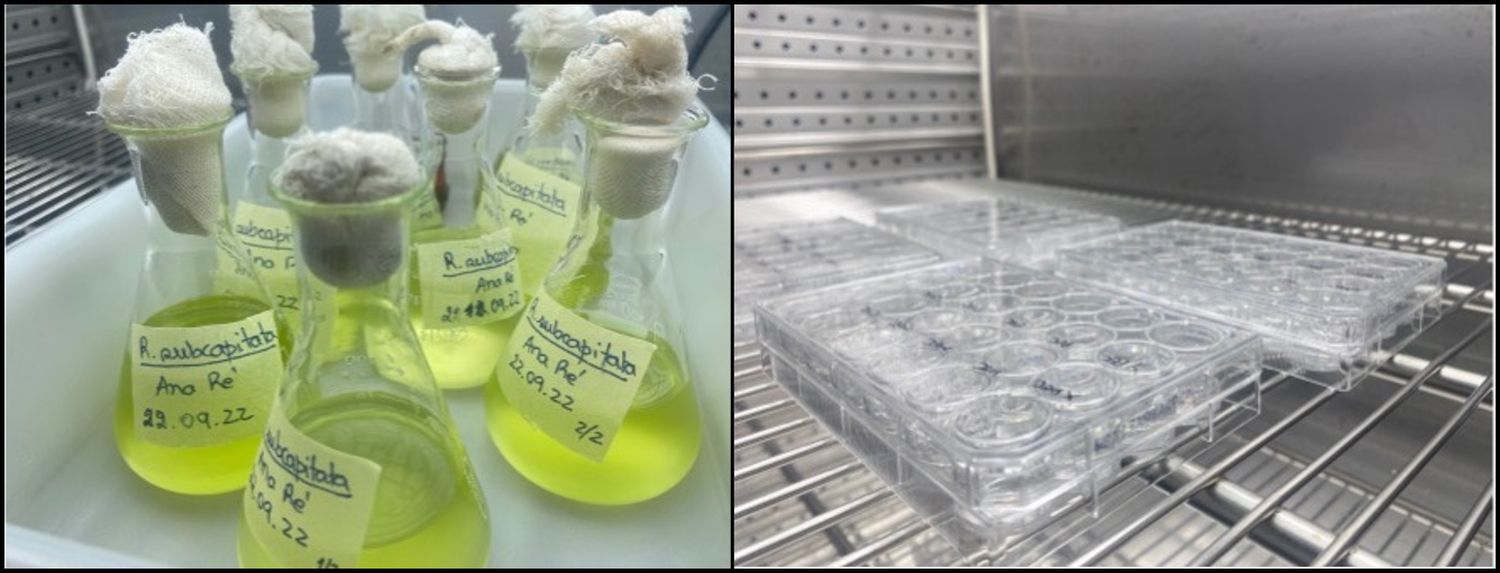
A growth inhibition test followed the OECD 201 standard guideline with adaptations to use 24-well plates. The microalgae Raphidocelis subcapitata was exposed during 96h. The microalgae growth was determined using the absorbance at the beginning and at the end of the test.
Cultures of Raphidocelis subcapitata and 24 multi-well test chambers used to carry out the assays.
Zooplankton
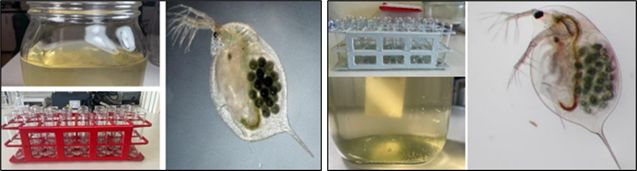
Acute immobilization tests were carried out with the standard species Daphnia magna and with a native species - Daphnia longispina , following the OECD 202 guideline. Neonates were exposed to the pesticide mixtures, and the percentage of daphnids that were immobilized (being no longer capable of swimming) were evaluated after 48 hours.
A reproduction test with D. longispina was also carried out, adapted from the OECD 211 guideline established for D. magna. Neonates were maintained individually in test vessels and fed with living Raphidocelis subcapitata algal cells. Exposures lasted 21 days, and offspring produced by each parent animal was counted daily.
Cultures of Daphnia magna and test tubes used to carry out the assays (on the left), and Cultures of Daphnia longispina and test tubes used to carry out the assays (on the right).
Fish
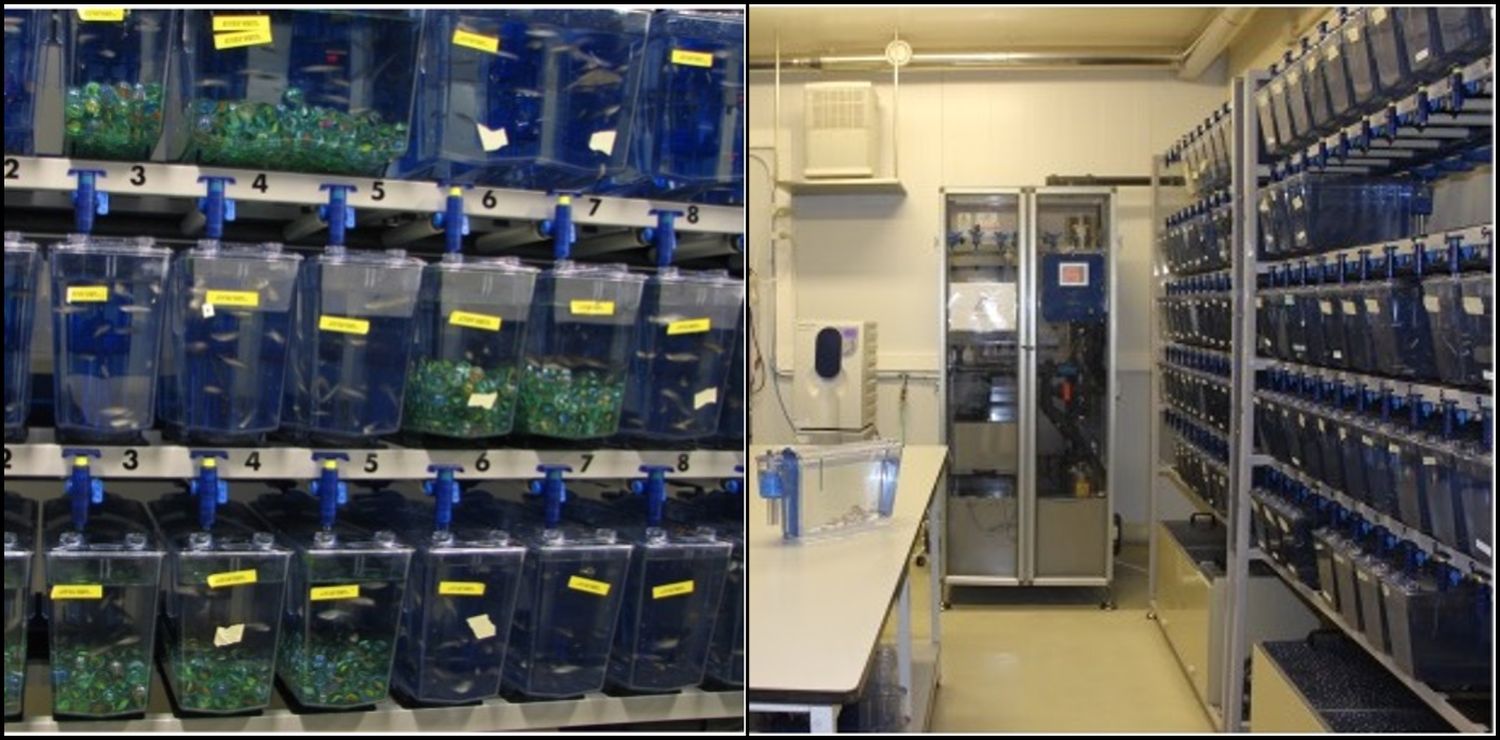
A fish embryo acute toxicity (FET) test was carried out with the zebrafish Danio rerio, following OECD 236. Newly fertilised zebrafish eggs of D. rerio were exposed during 96 hours. Every 24 hours, up to four apical observations were recorded as indicators of lethality: (i) coagulation of fertilised eggs, (ii) lack of somite formation, (iii) lack of detachment of the tail-bud from the yolk sac, and (iv) lack of heartbeat.
Zebrafish facility at the Department of Biology, University of Aveiro.