DISCLAIMER: The tools, as they currently stand, are provided for research and informational purposes only. The underlying models, assumptions, data sources, and methodologies are experimental and might have not yet been peer-reviewed or independently validated. Outputs may be incomplete, uncertain, or inaccurate and should be interpreted with caution. The tools do not provide regulatory, medical, legal, toxicological, or professional risk assessment advice. For the time being, it must not be used as a substitute for expert judgment, regulatory review, or established risk-assessment frameworks, nor relied upon for decision-making related to human health, environmental protection, occupational safety, product registration, compliance, or policy.
Use of these tools for unlawful, harmful, misleading, or unethical purposes—including but not limited to regulatory circumvention, misrepresentation of risk, or inappropriate application to real-world pesticide use decisions—is strictly prohibited. The tool is provided “as is,” without warranties of any kind, express or implied, including but not limited to accuracy, fitness for a particular purpose, or non-infringement.
Ecotoxicology Results - Water
Ecotoxicology Results – Water
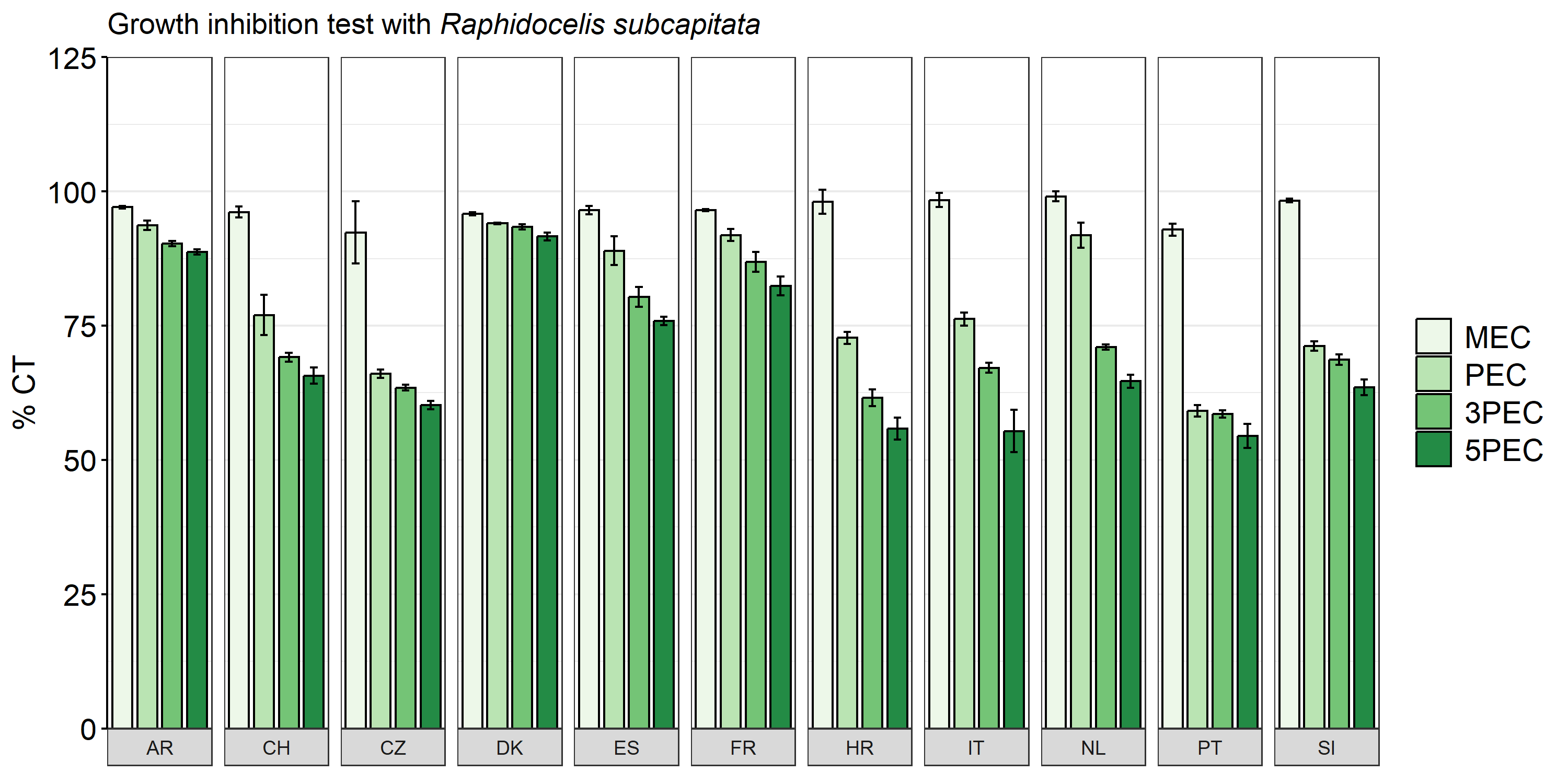
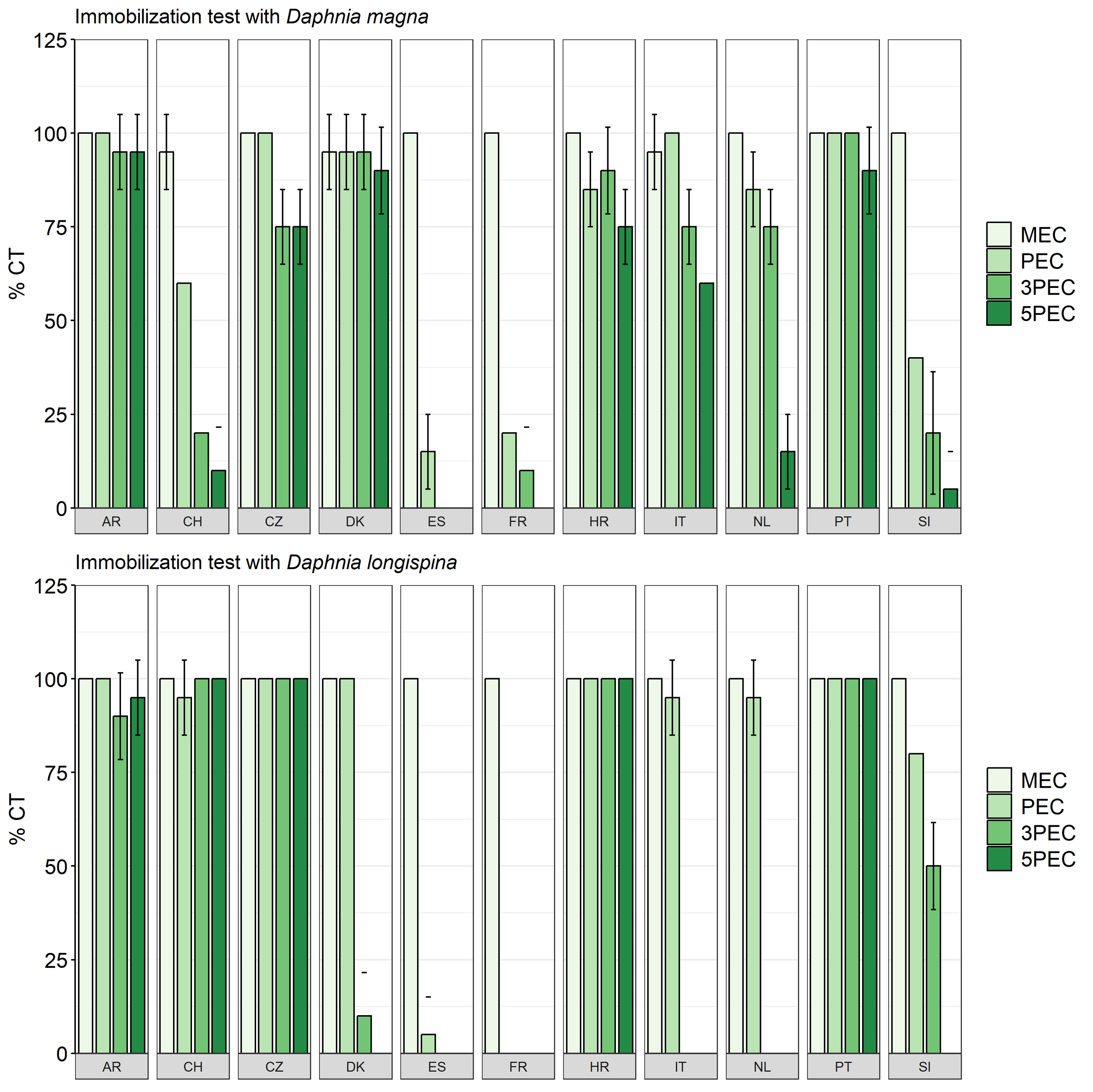
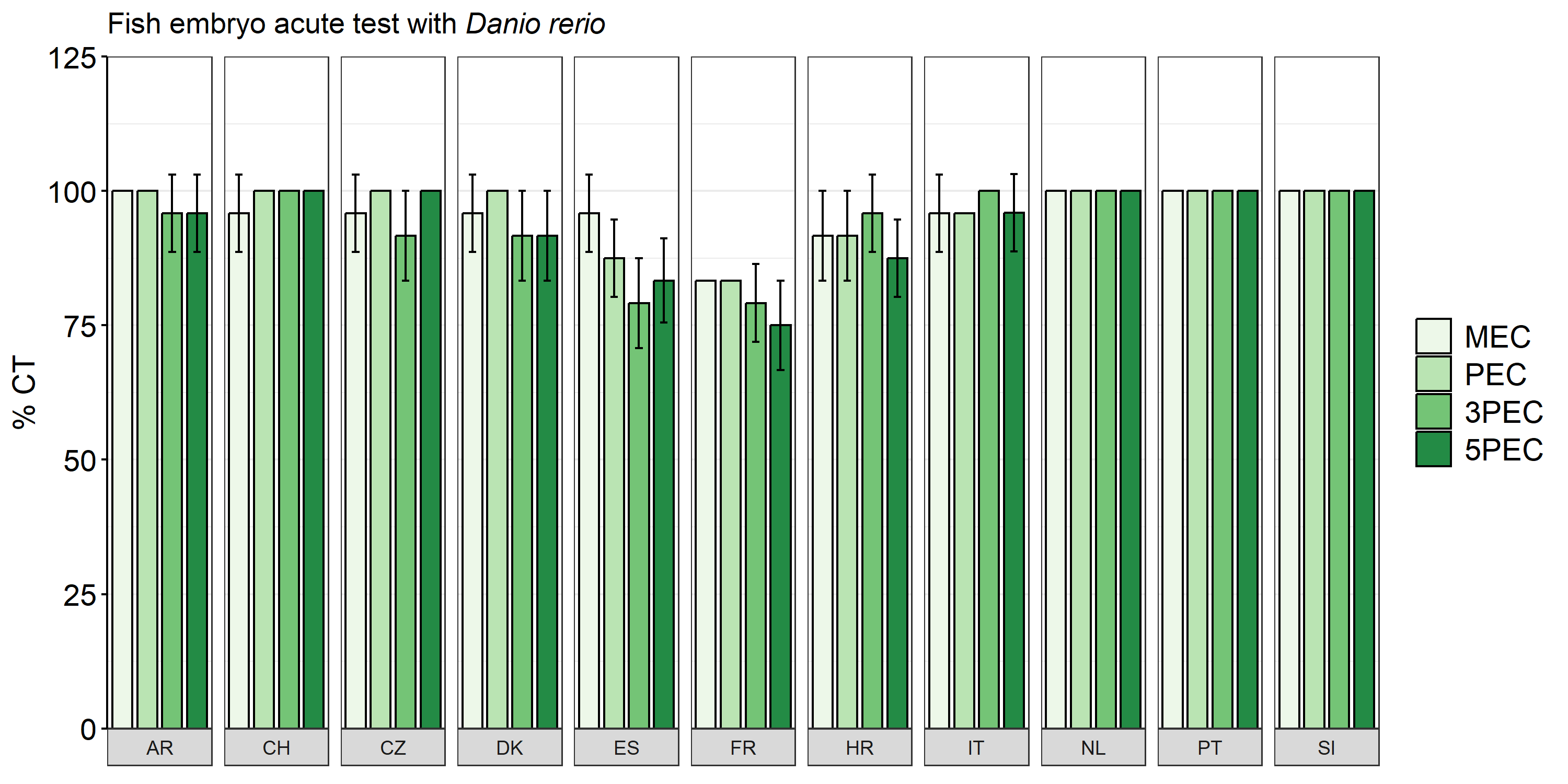
Adverse effects were observed at environmentally relevant concentrations. Microalgae and zooplankton were affected at concentrations corresponding to those acceptable under current regulation, which is the predicted environmental concentration (PEC) in water. In fish, one mixture caused effects at the same levels as those detected in water samples, corresponding to the measured environmental concentration (MEC).
Microalgae
Percentage of Raphidocelis subcapitata growth in relation to solvent control. Microalgae were exposed to median environmental concentration (MEC), predicted environmental concentration (PEC), three times PEC (3PEC), and five times PEC (5PEC). The error bars represent the standard deviation.
AR = Argentina; CH = Switzerland; CZ = Czech Republic; DK = Denmark; ES = Spain; FR = France; HR = Croatia; IT = Italy; NL = The Netherlands; PT = Portugal; SI = Slovenia.
Zooplankton
Percentage of immobilized animals in relation to solvent control for Daphnia magna (bottom) and Daphnialongispina. Daphnids were exposed to median environmental concentration (MEC), predicted environmental concentration (PEC), three times PEC (3PEC), and five times PEC (5PEC). The error bars represent the standard deviation.
AR = Argentina; CH = Switzerland; CZ = Czech Republic; DK = Denmark; ES = Spain; FR = France; HR = Croatia; IT = Italy; NL = The Netherlands; PT = Portugal; SI = Slovenia.
Fish
Percentage survival of the zebrafish Danio rerio in relation to solvent control. Fish were exposed to median environmental concentration (MEC), predicted environmental concentration (PEC), three times PEC (3PEC), and five times PEC (5PEC). The error bars represent the standard deviation.
AR = Argentina; CH = Switzerland; CZ = Czech Republic; DK = Denmark; ES = Spain; FR = France; HR = Croatia; IT = Italy; NL = The Netherlands; PT = Portugal; SI = Slovenia.